
 English
  日本語
日本語  한국어
한국어  français
  Deutsch
  ไทย
ไทย  Español
  italiano
  português
  العربية
  हिंदी
हिंदी Tel
0571-28818756
 View More


For premium beverage retailers, the sales floor is a delicate balance between open merchandising and risk management. Displaying high-end wine, spirits, and imported alcohol openly on shelves significantly boosts customer engagement and impulse purchases. However, it also transforms these premium bottles into primary targets for shoplifting.
To safeguard profits without locking inventory behind glass cabinets, global brands rely on advanced security bottle tags. These specialized devices bridge the gap between high visual appeal and robust retail security, allowing products to remain accessible to honest shoppers while establishing an immediate line of defense against shrinkage.
High-end alcohol and spirits consistently rank among the highest-shrinkage categories in the retail industry. Their high resale value on illicit markets, compact packaging, and widespread demand make them incredibly attractive to professional shoplifters and casual thieves alike. Without a visible deterrent, a retail store's beverage aisle can quickly become a significant profit drain.
Integrating an active EAS anti theft system directly counters this vulnerability. When items are left unprotected, store associates must spend their shifts monitoring aisles instead of helping customers. By securing each item at the bottleneck, retailers create a secure shopping environment.
Furthermore, relying on old-fashioned locking showcases hurts the overall customer experience. Modern shoppers want to pick up a bottle, read the vintage label, and inspect the ingredients without waiting for a staff member to unlock a display. Deploying high-quality security bottle tags preserves this critical sensory interaction, driving higher sales volumes while providing the store with automated, non-intrusive asset protection.
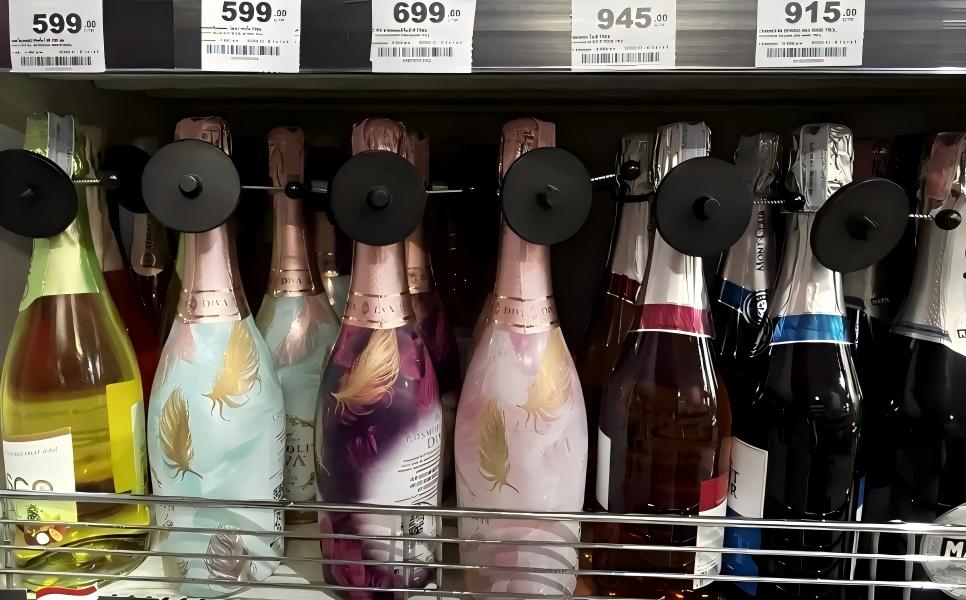
Understanding how these devices function in real-time helps procurement directors visualize their operational benefits. A complete EAS anti theft system relies on a seamless loop of wireless communication, hardware synchronization, and smooth checkout workflows.
The operational lifecycle follows a clear path:
When new inventory arrives, store staff perform electronic article surveillance tagging by securing the specialized bottle housing around the neck of each container. Once placed on the retail floor, the tag remains passive and completely unpowered. It simply waits and monitors.
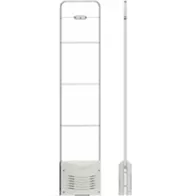
The active defense happens at the store boundaries. The detection pillars standing at the exit gates constantly emit a specific, invisible radio or magnetic frequency field. If a shoplifter attempts to carry a tagged bottle through the exit doors without paying, the internal circuit of the security bottle tags disrupts the gate's frequency field. The system instantly detects this structural interference and triggers a loud audible alarm alongside flashing visual alerts, immediately notifying security personnel.
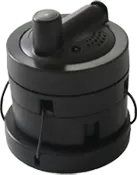
During a legitimate transaction, the workflow is fast and efficient. The customer brings the selected liquor to the cash register. The cashier utilizes a specialized magnetic detacher mounted behind the counter to release the locking clutch, removing the hard tag in a single motion. The paying customer then exits the store completely unhindered, leaving the reusable tag behind to be applied to the next incoming shipment.
Procurement managers face a complex set of choices when sourcing security hardware. Purchasing the wrong type of tag can result in poor gate detection, slow checkout lines, or physical damage to premium packaging. To streamline global sourcing, retail enterprises must evaluate four operational metrics.
The security bottle tags must operate on the exact frequency of your existing store gates. The two global industry standards are Radio Frequency (RF) running at 8.2 MHz and Acousto-Magnetic (AM) operating at 58 KHz. While RF tags are highly economical for basic packaging, AM technology offers superior signal range and is exceptionally resistant to interference caused by liquids and metal foils—making AM the gold standard for alcohol bottles.
Premium wine and spirits rely heavily on branding and visual appeal. A bulky, ugly security device can ruin the premium look of a luxury bottle. Retailers must source sleek, transparent, or low-profile designs that fit tightly around various neck diameters without obscuring the product labels or branding elements.
Consider the long-term total cost of ownership. While disposable adhesive stickers are cheap upfront, they are destroyed after one use and require continuous reordering. Heavy-duty plastic bottle rings require a higher initial investment but can be reused thousands of times over multiple years, significantly driving down supply chain costs over time.
| Operational Criteria | Heavy-Duty Reusable Tags | Disposable Security Labels |
|---|---|---|
| Material Build | High-impact ABS plastic | Thin, flexible adhesive sticker |
| Signal Resistance | High (Optimal for liquids) | Moderate (Prone to shielding) |
| Product Footprint | Fits around the bottle neck | Sticks to flat outer surfaces |
| Expected Lifespan | Reusable (Multi-year lifecycle) | Single-use (Deactivated at sale) |
| Best Asset Matches | Spirits, premium wine, liquor | Boxed cosmetics, pharmaceuticals |
To meet these demanding procurement standards, Hangzhou Century Co., Ltd engineered the B018 - 2 Bottle Tag. This professional-grade accessory is specifically tailored for high-value bottle-packaged products like luxury spirits, premium beverages, and high-end cosmetics, combining a highly practical design with incredibly stable performance.
With precise dimensions of Ø46mm × 75mm, the B018 - 2 is engineered to fit a wide range of bottle neck shapes and sizes perfectly, ensuring a tight, un-slip grip that cannot be easily pried off by shoplifters. Its signature advantage is its transparent color. By utilizing a clear plastic housing, the tag blends subtly with the bottle's native glass or liquid color, maintaining a strong anti-theft function without altering the aesthetic appeal of premium merchandise.
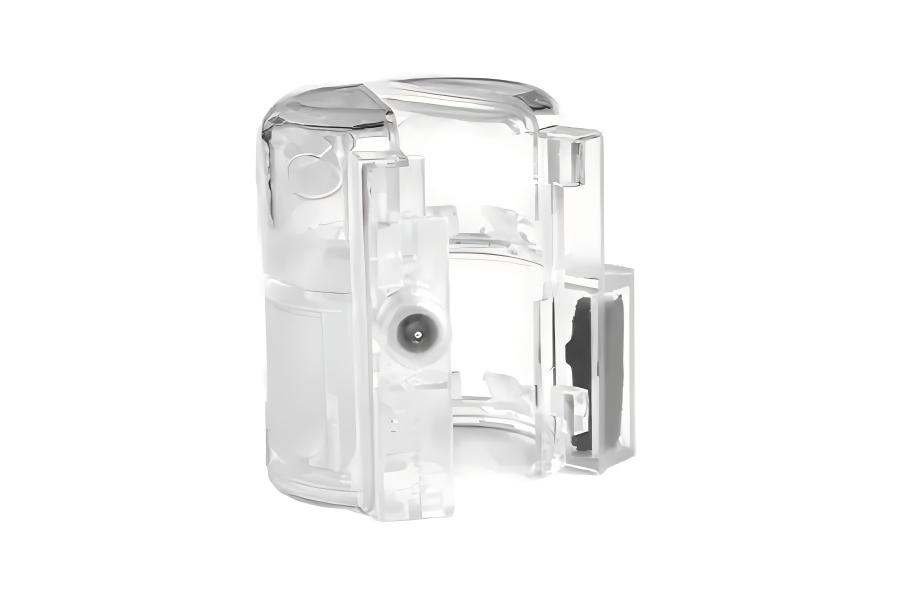
From a technical standpoint, the B018 - 2 eliminates compatibility concerns by supporting dual-frequency integration. It is fully available in both 58KHz and 8.2MHz variations, allowing it to integrate flawlessly with your pre-existing store antennas.
For international logistics managers, the packaging is optimized for heavy batch procurement. Each standard carton measures exactly 28 × 28 × 36cm, holding 100 pieces with a total shipping weight of 6.56kgs. This standardized, compact packaging ensures highly efficient storage, predictable freight costs, and straightforward inventory management across global distribution centers.
Choosing the right hardware is only half the battle; global brands must also partner with reliable, enterprise-grade electronic article surveillance companies capable of supporting massive rollouts. A trusted manufacturer does more than supply individual parts—they provide scalable systems that improve loss visualization, lower shrinkage, and streamline retail workflows.
Established in 2003, Hangzhou Century Co., Ltd stands as China’s earliest listed company in the retail security sector, managing one of the world's largest production bases for high-performance security hardware. Serving enterprise clients across more than 70 countries throughout Europe, the Americas, and the Asia-Pacific region, Century maintains a vast ecosystem of diverse EAS tags specifically engineered to eliminate high-shrinkage threats across global retail shelves.
Whether your multi-store network requires specialized, liquid-resistant bottleneck collars, high-durability detachers, or advanced EAS RFID tag variants for simultaneous item-level inventory tracking and anti-theft protection, Century delivers certified quality at scale. Backed by stringent ISO 9001 and ISO 14001 manufacturing standards and supported by global technical hubs, Century ensures your complete asset protection network operates flawlessly under demanding, high-volume conditions.
Securing premium wine, liquor, and spirits requires a loss prevention tool that deters theft without disrupting the visual impact of the brand's packaging. By understanding your inventory's specific material properties, choosing the correct frequency, and deploying optimized designs like the transparent Century B018 - 2 Bottle Tag, you can protect your high-risk assets while maintaining an open, engaging shopping environment. Partnering with a premier, globally certified EAS manufacturer ensures your retail infrastructure remains scalable, secure, and highly profitable for years to come.
Yes, the B018 - 2 is designed with dual-frequency flexibility. It can be ordered in either 58KHz (AM) or 8.2MHz (RF) configurations to ensure perfect compatibility with your store's existing EAS anti theft system framework.
Not at all. While the transparent housing allows the bottle's original branding, label, and liquid color to remain fully visible to shoppers, the physical structure around the bottleneck remains highly noticeable to shoplifters, signaling that the product is electronically protected.
Cashiers use a high-strength magnetic detacher installed safely at the point-of-sale counter. By placing the locking head of the bottle tag against the detacher, the internal clutch releases instantly, allowing the associate to remove the tag smoothly in seconds.
Yes. The standardized packaging dimensions of 28 × 28 × 36cm and a controlled weight of 6.56kgs per 100 pieces are designed to match standard international warehouse shelving, making batch procurement and pallet stacking exceptionally clean and organized.
Liquids and metal foils can severely degrade or completely block the wireless signals of flat adhesive stickers. Hard bottle tags isolate the security circuit away from the liquid contents and provide a much stronger physical and visual defense that cannot be easily peeled off in the aisle.
Century has been an industry leader since 2003 and is China's earliest listed company in the EAS domain. With a massive global supply chain, international support hubs, and eco-friendly innovations like PET-free sustainable tags, Century provides enterprise-level customization that smaller suppliers cannot match.