



 English
  日本語
日本語  한국어
한국어  français
  Deutsch
  ไทย
ไทย  Español
  italiano
  português
  العربية
  हिंदी
हिंदी Tel
0571-28818756
 View More


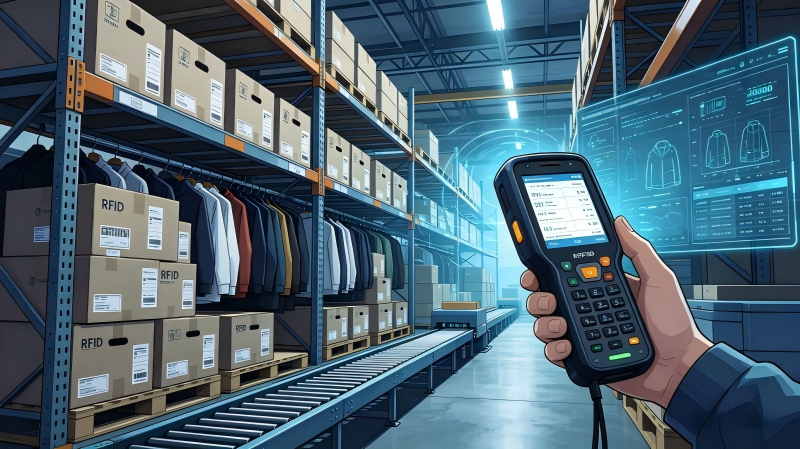
Retail labor costs are rising—and outdated inventory processes are quietly making things worse. Manual counting, slow receiving workflows, and inaccurate stock data (“ghost inventory”) drain productivity and reduce sales opportunities.
RFID for the apparel industry is changing that. By enabling fast, accurate, item-level visibility, RFID is becoming the new standard for apparel retailers looking to reduce labor costs and improve operational efficiency.
Manual inventory processes in apparel are slow and error-prone, leading to stockouts, overstocks, and wasted labor hours.
With item-level RFID apparel tags (UHF EPC Gen2 / GS1 EPC standards), retailers can achieve:
Near real-time inventory visibility
Inventory accuracy in the high 90% range
Up to 95% reduction in cycle count time
Significantly faster receiving processes
Key takeaway: RFID transforms labor-intensive tasks into fast verification workflows—freeing staff to focus on selling, fulfillment, and customer experience.
Traditional inventory methods create predictable issues:
Human error at scale: missed scans, incorrect size/color entries, misplaced items
Slow physical counts: often require after-hours labor or disrupt store operations
Outdated data: inventory is already inaccurate within hours of counting
Manual receiving is one of the biggest bottlenecks in retail:
Carton-by-carton checking
Manual reconciliation with paperwork
Delays in getting products to the sales floor
Result: inventory exists—but isn’t available to sell.
Barcodes require line-of-sight and one-by-one scanning. RFID enables bulk reading of multiple items simultaneously, without direct visibility.
With RFID apparel tags:
Staff can scan entire racks in seconds using handheld readers
Cycle counts become frequent and lightweight (daily/weekly vs. monthly)
Inventory accuracy improves for Omni-channel services like:
1) BOPIS (Buy Online, Pick Up In Store)
2) Ship-from-store
RFID success depends heavily on tag design and placement:
Antenna and inlay design affect read accuracy
Dense environments (e.g., stacked denim, metal fixtures) impact performance
Poor tag selection can reduce system effectiveness
Takeaway: RFID must be optimized for your specific store layout and product mix.
RFID eliminates the need to scan items individually:
Validate shipments against ASN (Advanced Shipping Notice) quickly
Identify discrepancies (missing or extra items) immediately
Prevent incorrect inventory from entering the system
With RFID-enabled receiving:
High-demand items can move directly from inbound to the sales floor
Reduced backroom handling time
Improved product availability during peak demand
RFID doesn’t just reduce labor—it makes it more productive:
Less time spent counting and searching
More time spent selling and fulfilling orders
Fewer missed sales due to inaccurate stock
This is especially critical in today’s labor-constrained retail environment.
RFID performance starts with the right tag selection. Common options include:
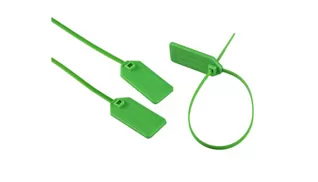
Hard tags: durable, reusable, often used for loss prevention
Soft labels: cost-effective for large-scale item-level tagging
Sewn-in care labels: ideal for lifecycle tracking and permanent identification
Tag performance varies based on:
Fabric type (synthetic vs. natural fibers)
Product density (e.g., stacked garments)
Store fixtures (metal racks, shelving)
Packaging (polybags, cartons)
Best practice: conduct real-world testing before full deployment.
| Process | Manual Method | RFID Method | Improvement |
| Monthly Cycle Count | 40 hours | 2 hours | -95% |
| Shipment Receiving | 5 hours | 15 minutes | -95% |
| Inventory Accuracy | 65–70% | 98–99% | 30% |
Calculate labor savings (hours × fully loaded labor cost)
Add recovered sales from improved stock accuracy
Include fulfillment savings (fewer order errors and cancellations)
Industry research from Auburn University RFID Lab and GS1 US supports these efficiency gains.
RFID also supports ESG and sustainability goals:
Fewer inventory errors → less unnecessary replenishment
Improved accuracy → reduced expedited shipping
Better demand matching → lower overstock and markdown waste
Key insight: Operational efficiency directly reduces environmental impact.
By enabling bulk scanning for inventory counts and faster receiving verification, reducing manual effort and rework.
Most retailers use UHF EPC Gen2 / GS1 EPC-compatible tags, selected based on fabric, use case, and environment.
Yes. RFID integrates with ERP, WMS, and OMS platforms via middleware, enabling real-time inventory updates and workflow automation.
RFID is no longer experimental—it’s a proven technology delivering measurable ROI in apparel retail. From cycle counting to receiving, it eliminates inefficiencies, improves accuracy, and unlocks better customer experiences.
Retailers adopting RFID today are not just cutting costs—they’re building a more agile, data-driven operation ready for Omnichannel growth.
A successful RFID deployment requires more than just technology—it depends on choosing the right solution and implementation approach.
Select the right tags for your apparel categories
Validate performance in real store environments
Ensure seamless integration with existing systems
Work with experienced deployment partners
Contact us to explore a customized RFID solution and ROI assessment for your business.